
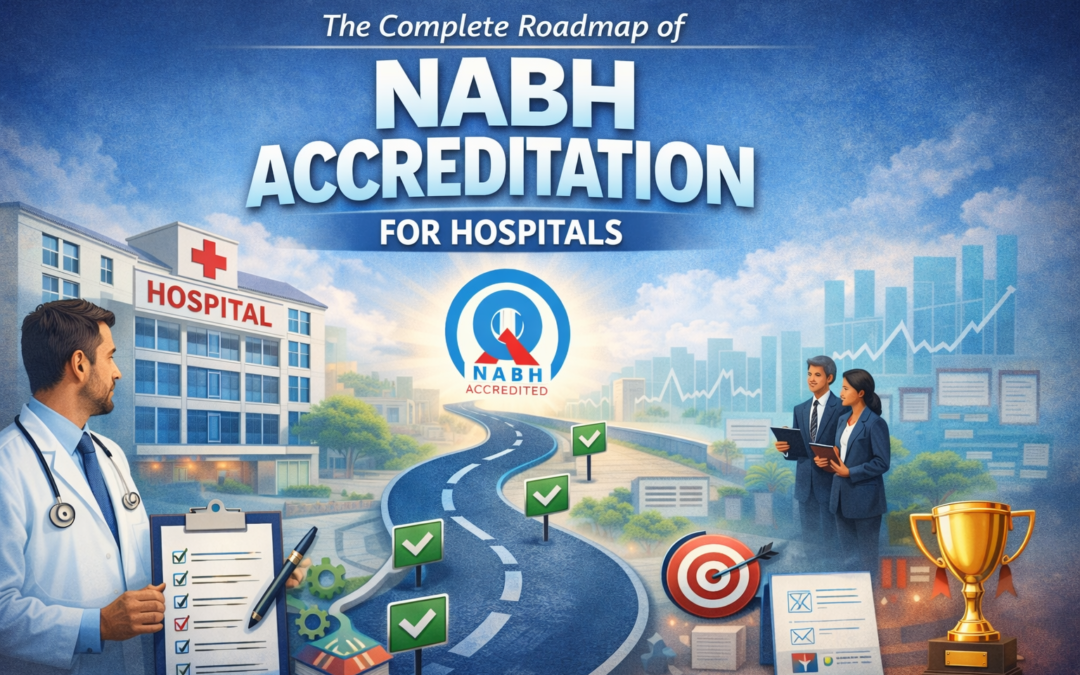
Achieving NABH accreditation is a significant milestone for any hospital in India, reflecting a commitment to quality healthcare, patient safety, and operational excellence. The National Accreditation Board for Hospitals & Healthcare Providers (NABH) sets rigorous standards that help hospitals align with global best practices. Here’s a clear roadmap to guide hospitals through the accreditation process.
1. Understanding NABH Standards
The journey begins with a thorough understanding of NABH standards. These cover key areas such as patient rights, infection control, medication management, facility safety, and continuous quality improvement. Hospitals must familiarize their teams with these guidelines and assess current gaps.
2. Gap Analysis and Planning
Conducting a detailed gap analysis is crucial. This involves comparing existing hospital processes with NABH requirements to identify areas needing improvement. Based on this, a structured implementation plan with timelines, responsibilities, and resource allocation should be developed.
3. Team Formation and Training
A dedicated NABH core team should be formed, including doctors, nurses, administrators, and quality managers. Regular training sessions must be conducted to ensure all staff understand protocols, documentation standards, and patient safety practices.
4. Documentation and SOP Development
Documentation is the backbone of NABH accreditation. Hospitals must create and standardize policies, procedures, and Standard Operating Protocols (SOPs) for every department. This ensures consistency and accountability across all operations.
5. Implementation of Processes
Once SOPs are in place, the next step is implementation. Hospitals must ensure that all processes are followed diligently in daily operations. Regular internal audits help monitor compliance and identify deviations early.
6. Quality Indicators and Monitoring
Hospitals must track key performance indicators such as infection rates, patient satisfaction, and clinical outcomes. Continuous monitoring and corrective actions are essential to demonstrate a culture of quality improvement.
7. Pre-Assessment and Final Audit
Before the final assessment, hospitals often conduct mock audits or opt for a pre-assessment by NABH. This helps identify last-minute gaps. The final NABH assessment involves a detailed on-site evaluation by trained assessors.
8. Accreditation and Continuous Improvement
Upon successful assessment, the hospital is awarded NABH accreditation. However, the journey doesn’t end here. Continuous compliance, regular audits, and quality improvement initiatives are necessary to maintain accreditation.
Conclusion
NABH accreditation is not just a certification—it is a transformation journey. It enhances patient trust, improves clinical outcomes, and strengthens hospital systems. With the right approach, planning, and commitment, hospitals can successfully navigate this roadmap and establish themselves as providers of high-quality healthcare.
Recent Comments