
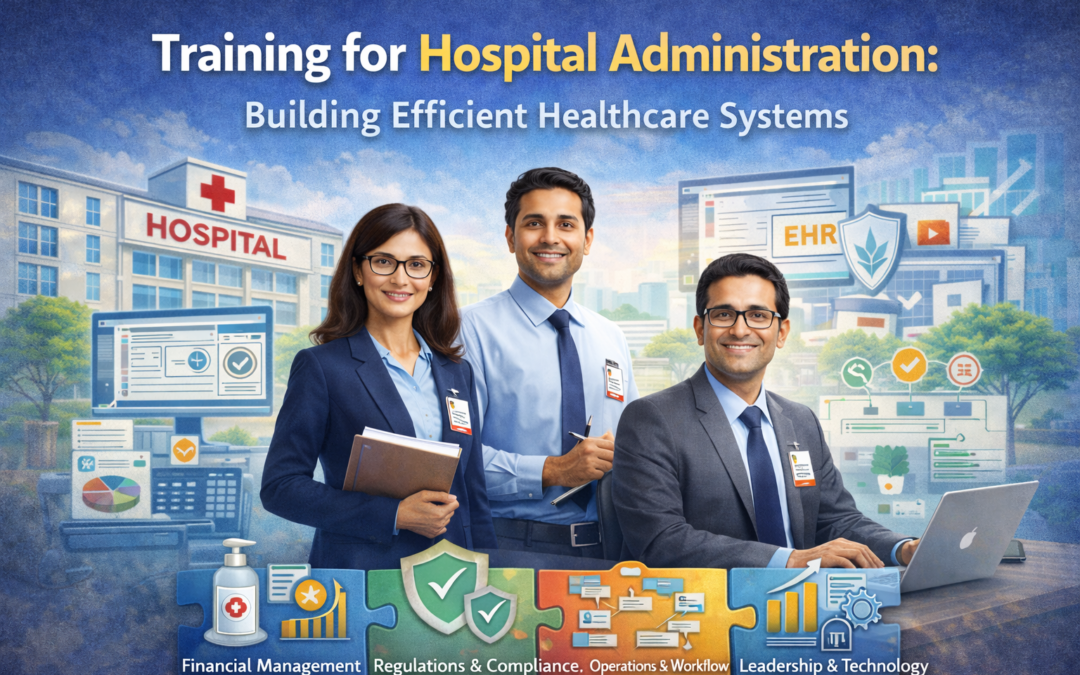
Effective hospital administration is the backbone of a well-functioning healthcare facility. While clinical excellence is vital, strong administrative systems ensure smooth operations, optimal resource utilization, and a high standard of patient care. Training in hospital administration plays a crucial role in developing professionals who can manage these complex systems efficiently.
Hospital administration training focuses on a wide range of competencies, including operations management, healthcare policies, finance, human resource management, and patient relationship management. Administrators must understand how different departments—such as emergency, outpatient, billing, and support services—work together to deliver seamless care.
One of the key areas of training is healthcare regulations and compliance. Administrators must be well-versed in national standards, legal requirements, and accreditation guidelines. This ensures that the hospital operates within regulatory frameworks while maintaining quality and safety standards.
Financial management is another critical component. Training equips administrators with the skills to manage budgets, control costs, optimize revenue cycles, and make strategic financial decisions. Efficient financial planning directly impacts the sustainability and growth of the hospital.
Leadership and communication skills are equally important. Hospital administrators must coordinate with doctors, nurses, vendors, and patients. Training helps them develop the ability to lead teams, resolve conflicts, and foster a collaborative work environment.
With the increasing adoption of technology in healthcare, administrators must also be trained in hospital information systems, electronic medical records (EMR), and data management. This enables them to improve operational efficiency and ensure accurate, secure handling of patient information.
Crisis management and decision-making are essential aspects of administration training. Whether dealing with emergencies, staffing shortages, or unexpected challenges, trained administrators can respond quickly and effectively.
In conclusion, training for hospital administration is essential for building efficient, patient-centric healthcare systems. It empowers professionals to manage operations strategically, ensure compliance, and enhance overall service quality. A well-trained administrative team not only supports medical staff but also drives the hospital toward long-term success and excellence.
Recent Comments